
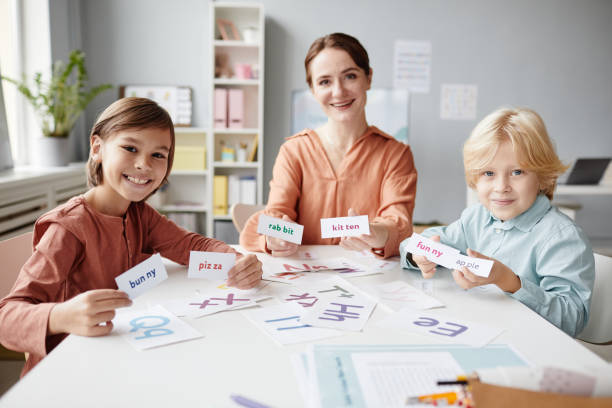
As parents, we marvel at every milestone our children reach. From their first steps to their first words, each achievement fills us with pride. But beyond the joy of hearing “mama” or “dada,” there’s a profound importance to early language development that significantly impacts a child’s future success. And at the heart of this development? Active parent engagement.
It’s not just about correcting grammar or teaching the alphabet; it’s about creating a rich, interactive linguistic environment from day one. The conversations, stories, and songs we share with our little ones are the building blocks of their cognitive, social, and emotional growth.
Why is Parent Engagement So Crucial?
1. Brain Development: A child’s brain is a super sponge, especially in the early years. Exposure to a wide range of vocabulary and complex sentence structures literally wires their brains for language acquisition. Parents are a child’s first and most influential teachers. Regular verbal interaction stimulates neural connections, enhancing their ability to understand and produce language.
2. Vocabulary Growth and Literacy Skills: The more words a child hears, the more words they learn. Studies consistently show a strong correlation between the quantity and quality of parental talk and a child’s vocabulary size. This early vocabulary development is a critical predictor of later reading comprehension and academic achievement. Children who enter school with a rich vocabulary have a significant advantage in understanding written text and excelling in various subjects.
3. Social and Emotional Development: Language is the primary tool for communication, connection, and expressing emotions. When parents engage in conversations with their children, they not only teach words but also model social cues, turn-taking, and empathy. This interaction helps children understand their own feelings and the feelings of others, fostering stronger social bonds and emotional intelligence.
4. Cognitive Skills: Engaging in conversations encourages children to think, question, and problem-solve. When parents ask open-ended questions, describe objects, and explain concepts, they are nurturing critical thinking skills. This lays the groundwork for academic success across all disciplines, from math to science.
What Does the Research Say?
The evidence supporting the impact of parent engagement on early language development is extensive and compelling:
- Hart and Risley (1995) – Meaningful Differences in the Everyday Experience of Young American Children: This landmark study highlighted the significant “word gap” between children from different socioeconomic backgrounds. They found that children from professional families heard significantly more words per hour than children from welfare families, leading to a substantial vocabulary difference by age three. This research underscored the critical role of the quantity and quality of parental talk in early language exposure.
- Weisleder and Fernald (2013) – Talking to Children Matters: Early Language Experience and Language Processing in Infants: This study, published in Psychological Science, demonstrated that not just the quantity, but also the style of parental talk matters. They found that infants whose parents used more child-directed speech (speaking directly to the child, often with exaggerated intonation and simplified syntax) showed faster language processing skills and larger vocabularies at 24 months.
- Rowe (2012) – The Early Growth of Academic Skills: A Review of the Evidence: Research from Meridith Rowe emphasizes the powerful link between parent language input during the preschool years and children’s later academic achievement. Her work consistently shows that a rich linguistic home environment positively impacts literacy skills, mathematical abilities, and overall cognitive development.
- Pace et al. (2017) – The Impact of Parent-Child Book Reading on Language Development: A Meta-Analysis: A meta-analysis published in Child Development reviewed numerous studies and concluded that shared book reading between parents and children has a significant positive impact on children’s expressive and receptive language skills, vocabulary, and emergent literacy.
Practical Tips for Engaging Parents in Early Language Learning:
It doesn’t require a special degree or expensive materials. Here are simple yet powerful ways parents can foster language development:
- Talk, Talk, Talk: Narrate your day, describe objects, explain actions. The more words your child hears, the better.
- Read Aloud Daily: Even before they understand the words, reading together exposes children to language patterns, new vocabulary, and the joy of stories.
- Sing Songs and Rhymes: Rhythmic language helps children develop phonological awareness, a key pre-reading skill.
- Ask Open-Ended Questions: Instead of “Is that a dog?”, try “What do you see the dog doing?” to encourage more elaborate responses.
- Listen Actively: Show genuine interest in what your child is trying to communicate, even if it’s just babbling. Respond and build upon their attempts.
- Play Language Games: “I Spy,” naming games, and storytelling together can make language learning fun.
Investing time and effort in early language engagement is one of the most significant gifts parents can give their children. It’s a foundation that will support their learning, communication, and overall well-being for years to come.